
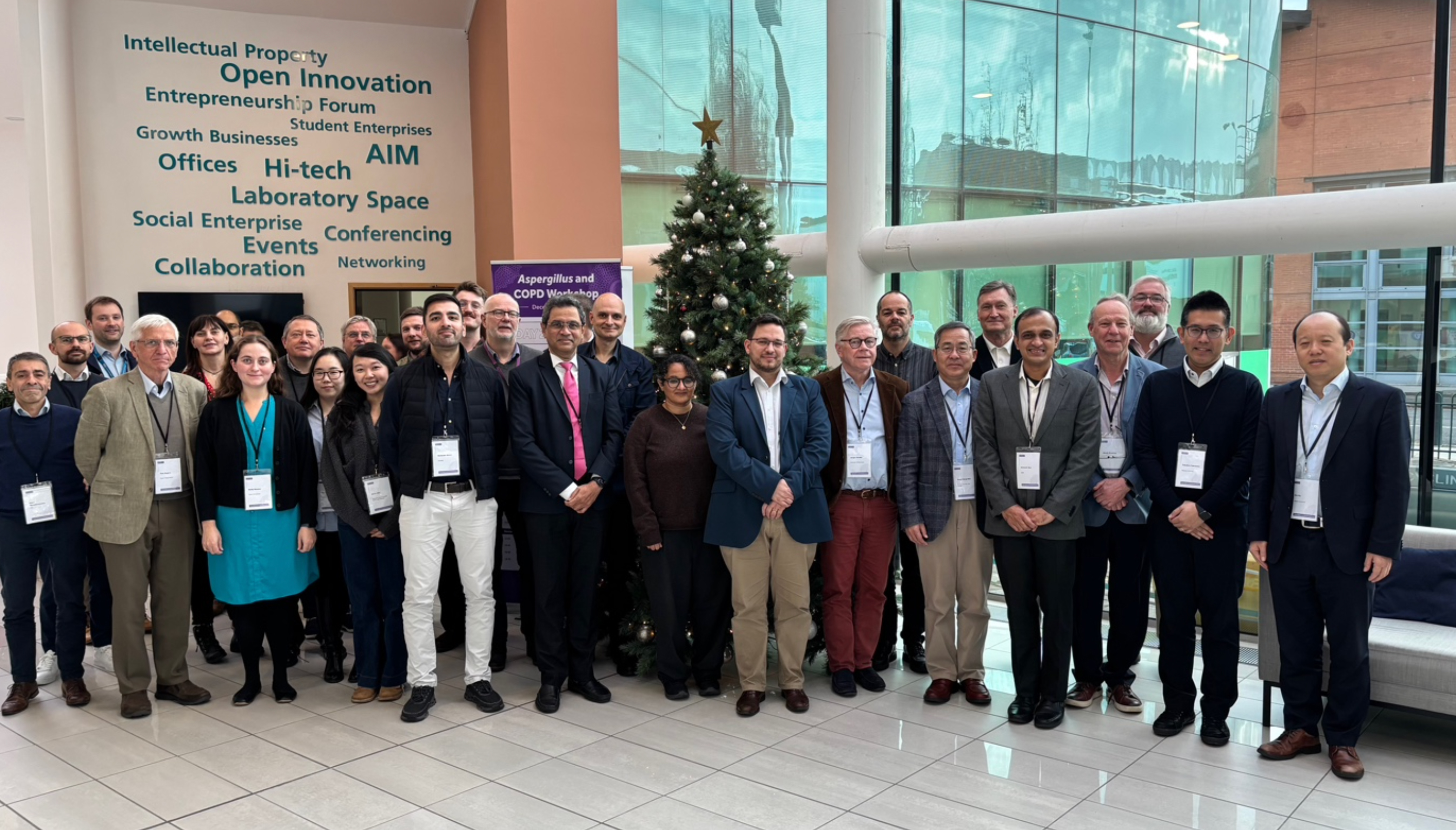
At a specialist focus meeting at the University of Manchester, international clinicians and scientists convened to share expertise on the multiple interactions of Aspergillus fungus and the lungs in those with chronic obstructive pulmonary disease (COPD).
The meeting was co-hosted by the University of Manchester and the Fungal Infection Trust (FIT) with contributions from industry and the North West Lung Centre charity.
Most COPD globally is caused by smoking, but an increasing cohort of non-smoking mostly women have been identified along with those who have recovered from tuberculosis. National and international estimates indicated 200 to 500 million affected, with ~100 million in China alone.
Aspergillus causes an allergic reaction in those with COPD in about 15%. Aspergillus persists in the airway in 8-16% in COPD patients. This persistence and/or allergy is linked to worse lung function and exacerbations of COPD. Further, Aspergillus can invade tissue and cause fungal pneumonia in ~1 in 40 COPD patients admitted to hospital and intensive care. Globally this equates to ~1.2 million cases, with death unfortunately a frequent outcome and a major contributor to the global 3.5 million COPD deaths annually.
The ubiquitous fungus Aspergillus is especially common in bedrooms and linked to composting and damp housing. The airways of people with COPD do not kill the fungus as efficiently as those with normal lungs. Oral steroid tablets, and probably inhaled steroids, both of which are commonly given to those with COPD, further impair the ability of the immune system to kill Aspergillus.
Dr David Denning, Professor of Infectious Diseases in Global Health at the University of Manchester and Scientific Advisor to the FIT convened the meeting. He said:
“The low awareness of the negative impact of Aspergillus in COPD is an unvirtuous circle – no tests are done, no studies of antifungal therapy have been done, patients die with no recognition of the problem. Improved diagnostics and prevention are key.”
Dr Jorgen Vestbo, Emeritus Professor of Respiratory Medicine at the University of Manchester and an expert in COPD co-chaired the meeting. He declared,